Shirley Erwee
Shirley Erwee
LEGO Lessons for Young Entrepreneurs
Discover the unexpected story behind LEGO’s inventor and the powerful lessons his resilience, innovation and risk-taking offer parents raising young entrepreneurs.
When children pour out a tub of LEGO bricks, they probably don't even know the name of the man behind the idea. Yet the story of Ole Kirk Christiansen, the Danish carpenter who founded LEGO, is one of the most compelling examples of grit, innovation and value creation in modern business history. His journey offers valuable lessons for families who want to raise children who think like problem-solvers rather than passive consumers.
From Carpenter to Toymaker: A Story Built Brick by Brick

The founder of LEGO, Ole Kirk Christiansen
Ole Kirk Christiansen began as a carpenter in rural Denmark in the early 1900s. He created wooden ladders, ironing boards and other wooden household goods to support his family.
Sadly, he suffered some hard knocks in life. His workshop burned down in 1924 and shortly afterwards, his wife died, leaving him to raise four sons alone, but always hopeful, he constructed a larger facility and worked on expanding his business.
However, when the Great Depression hit (1929 onwards), orders dried up and the business struggled. Many would have given up or retreated to something safer, yet Ole refused to accept defeat. Instead, having noticed that small wooden toys still brought joy to children, even in hard times, he began crafting miniature animals and vehicles from leftover wood.
This was a decision driven by observation and courage—the kind of entrepreneurial thinking we hope to instil in our children.
His motto was simple, both practical and deeply meaningful: “Only the best is good enough.”
The Pivot that Changed Everything
Following World War 2, in the 1940s, a new material arrived in the region: plastic. Most toymakers dismissed it as cheap and inferior, but Ole saw what others missed. In 1947, against all advice from others, he purchased a plastic injection-moulding machine and risked his fragile business on an untested future.
Using his new machine, he created plastic bricks but the first products he sold were crude and didn't lock together very well. Children became frustrated and not surprisingly, sales were poor. Yet again Ole persisted. He refined the design and introduced the now-famous interlocking stud-and-tube system, which allowed endless combinations and stability.
It was this single innovation, which was born from curiosity, risk-taking and relentless iteration, that transformed LEGO into the global brand we know today.
That moment, the risky leap into a material no one believed in, was the turning point that changed everything.
Lessons for Parents Raising Entrepreneurs
The LEGO story is not simply a business tale; it is a blueprint for cultivating entrepreneurial character in our homes.
1. Resilience grows through real challenges
Ole’s life was marked by loss, scarcity and repeated setbacks. What stands out is not the hardships themselves but the way he responded. Our children learn resilience not through comfort, but through opportunities to solve problems, make decisions and try again.
Allow children to experience small struggles. Let them troubleshoot. Let them fail safely. These are the 'bricks' that build internal strength.
2. Innovation often comes from scarce resources
Ole’s first toys were created from leftover wood that most would have thrown away. Entrepreneurs learn to see value where others see waste. When children are encouraged to reuse materials, repurpose objects or create something new from what they already have, they build that same mindset.
Challenge your child to create a product, gift or solution using only what is available at home. Scarcity can be an effective teacher.
3. A strong work ethic is priceless
Ole believed that quality was a moral responsibility. He refused to compromise, even when times were desperate. This principle later shaped LEGO’s enduring reputation for excellence.
Families who want to raise entrepreneurs can cultivate this by encouraging children to take pride in a job well done, whether they are completing a chore, serving a customer or doing schoolwork. Excellence becomes a habit long before it becomes a business strategy.
4. Failure is not the end;
it's the start of a new iteration
Those early plastic bricks were a disappointment, yet Ole and his son Godtfred, worked tirelessly to improve them. Instead of abandoning the idea, they refined the blocks again and again.
When your child’s first attempt at a business idea, baking project or handmade product does not work, resist the urge to fix it yourself or let them give up. Ask questions instead: "What could you change? What did you learn? What will you try next?" This builds a mindset of continuous improvement.
5. Think long-term, not quick wins
LEGO became a global success only because Ole invested in quality, innovation and systems long before the world recognised their value. He understood that lasting success is built slowly.
Children raised with a long-term perspective are less likely to chase fads or become discouraged when success does not happen instantly. They learn to persevere, plan and build patiently.
6. Creating joy is a legitimate form of value
Ole’s motivation was not just profit; he wanted to create toys that inspired creativity and delight. This matters. One of the most insightful lessons we can teach children is that entrepreneurship is about solving a problem or serving people, not simply making money.
When children focus on making someone’s life easier, happier or more beautiful, they develop a value-driven approach that leads to sustainable success.
Bringing LEGO Principles into Your Home
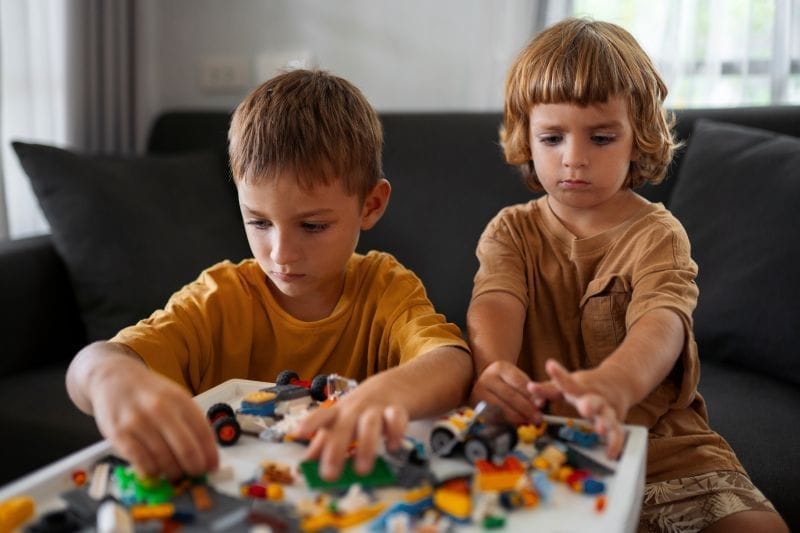
You do not need a factory or a workshop to nurture these qualities. You can start today with simple practices:
Encourage children to build something, physical or digital and test it.
Celebrate improvement, not perfection.
Let children manage small amounts of money linked to real work or a business idea.
Model persistence in your own challenges and talk about what you learn as you go.
Create opportunities for your child to sell something, serve someone or solve a problem.
LEGO began with a single carpenter who refused to stop learning, adapting and trying again. When we teach our children to think the same way, we equip them with the kind of inner strength and innovative spirit that no economic climate can ever take away.
Their lives, like a box of LEGO bricks, become full of possibility.


Stay fired up for success with Shirley's
Entrepreneur Newsletter
Raising Job Creators
Keep up the momentum of building your family's financial education.
Don't lose your drive to take small daily steps to reach for big dreams.
Your privacy is secure.
You can opt-out anytime.
Categories
Raising Job Creators Newsletter
Subscribe to the newsletter and stay fired up for success! By joining, you acknowledge that you'll receive Shirley's newsletter. You can opt-out anytime hassle-free.
Copyright © 2025-2026. Shirley Erwee. All Rights Reserved
Created with ©systeme.io