Shirley Erwee
Shirley Erwee
Kids and Money: What Can a Five-Year-Old Learn about Money?
How young is too young to start teaching children about money?
Long before children understand budgets or bank accounts, they soak up the financial mindsets modelled at home. Being intentional early on sets the stage for a lifetime of healthy money habits.
Many parents assume that financial education belongs much later, when children are old enough to do maths, understand budgets, bank accounts, interest and investing.
A five-year-old, after all, is still learning to read, count and tie his shoes.
Yet five is a surprisingly good age to begin.
A five-year-old does not need a lecture about compound interest or a spreadsheet showing household expenses. He needs something much simpler: opportunities to discover that money is limited, that people make choices about how they use it, that work creates value and that getting something usually means giving something up.
Financial education begins long before children are old enough to manage a bank account. It begins with the everyday decisions they see us making.
The Most Powerful Money Lessons are Caught not Taught
At five years old, your child is learning about money whether you are deliberately teaching him or not.
Young children are watching us. They absorb our behaviour, our words, our attitudes and even the emotional atmosphere around money.
Long before a child understands what a budget or a bank account is, he is forming ideas about what money means and how adults behave around it.
If money is a constant source of stress or fear in the home, a child can begin to associate money with fear.
If parents regularly argue about money, children see that money can be a source of conflict.
If money is never discussed, a child may learn that money is something taboo, private or uncomfortable that adults don't talk about.
If children constantly see their parents going into debt to buy things they cannot afford, borrowing from one person to pay another or using credit as though it were extra income, they can grow up believing that this is simply how adults manage money.
If a family has a constant scarcity mindset, where there is never enough and every financial decision is accompanied by anxiety, children absorb that attitude too.
None of this means that parents need to pretend that money is always easy. Most families, especially young families, experience genuine financial pressures and children do not need a false picture of financial life. What matters is the attitude and behaviour they see modelled.
Your child is learning from how you respond to money challenges.
Imagine the difference between hearing:
"We can't afford that."
and hearing:
“How can we afford that?" or “We can't buy that right now. What could we do to afford it?"
The first statement can close the conversation. The second option opens a door to possibility.
It invites creativity, problem-solving and responsibility.
Perhaps the answer is to save. Perhaps it means finding a cheaper alternative. Perhaps the family needs to earn some extra money. Perhaps the thing is simply not important enough to make room for in the budget.
The point is not that every family should somehow find a way to afford everything they want. That would teach a very different and equally unhelpful lesson.
The point is that "How can we afford it?" encourages children to think about possibilities rather than simply accepting financial limitations as the end of the conversation.
A parent who responds to a financial challenge by looking for solutions is modelling something far more valuable than a money rule.
He or she is showing the child:
We can think.
We can solve problems.
We can create value.
We can make choices.
We are responsible for the way we use our money.
These are the attitudes we want our children to carry into adulthood.
At five, your child may not remember a single conversation about financial literacy. He is much more likely to remember what money felt like in your home and what he saw the adults around him doing with it.
That is why parents are the first and most powerful financial educators their children have.
Before You Teach Your Children About Money, Look at Your Own Money Mindset
This is one of the reasons I created The Roots of Wealth, my financial education course for parents.
We cannot simply hand our children a list of money rules and expect those rules to overcome everything they see us doing. If we want to raise financially educated children, we need to understand our own attitudes towards money first.
The Roots of Wealth helps parents examine the money mindsets and beliefs they have inherited, understand the messages they may be communicating to their children and develop practical strategies for making financial education part of everyday family life.
It is not about becoming a perfect parent or having perfect finances. It is about becoming more intentional about the financial lessons your children are receiving.
The course gives parents practical tools and strategies they can use to raise children who understand money, recognise opportunities, make responsible choices and develop the confidence to create value rather than simply waiting for money to come to them.
What Does a Five-Year-Old Really Need to Know About Money?
At five, the goal is not to make a child financially sophisticated. It is to start building the mental framework that will eventually help him become financially responsible.
A five-year-old can begin to understand that:
Money is used to buy things.
Different things cost different amounts.
We cannot buy everything we want.
We need to make choices about how we spend money.
People earn money by doing useful work.
Saving means keeping money for something we want later.
Giving is another way we can choose to use money.
We should look after the things we own.
We do not always get what we want immediately.
These may sound like very simple lessons, but they are foundational.
The child who learns to wait for something he wants is beginning to practise delayed gratification. The child who has to choose between two things because he cannot afford both is beginning to understand opportunity cost. The child who earns a small amount by doing something useful is beginning to connect work, value and income.
Those can be life-changing ideas.
Kids and Money:
Start with Physical Money

One of the easiest mistakes parents make is making money invisible.
Children watch us tap a card at the supermarket, order something online or pay for dinner at a restaurant, but they do not necessarily understand what is happening. To a young child, it can look as though the card itself mysteriously produces money.
Five-year-olds can learn much more when money becomes something they can see and handle.
Let your child handle coins and notes. Let him count them. Talk about what they are worth. When you are shopping, occasionally explain why you are choosing one product rather than another.
You might say:
"We have $50 to spend on these groceries. We need bread and milk, so let's see what else we can afford."
Suddenly the shopping trip becomes a practical lesson even if your child’s maths skills are still developing.
You do not need to turn every trip to the shops into a lesson. In fact, that would probably make everyone miserable. The point is simply to allow children to see that money decisions are part of ordinary life.
Teach the Difference between Needs and Wants
A five-year-old can begin to understand the difference between something we need and something we want.
He needs food.
He wants the chocolate at the checkout.
He needs clothing.
He wants another toy.
The distinction will not always be clear-cut, and that is fine. The purpose is not to create a rigid list of approved purchases. It is to introduce the idea that wanting something does not automatically mean we should buy it.
Instead of simply saying, "No, we can't afford that," you can sometimes say:
"That's something you would like. Let's think about whether it is something you need."
This gives the child a framework for thinking rather than simply a prohibition.
Let Children Experience Saving
Saving is difficult for young children because five-year-olds live very much in the present.
That is precisely why saving is worth practising.
Give your child a clear savings goal. It might be a small toy, a book or an outing to a place with an entrance fee. Help him put money aside in a transparent container so he can physically see his savings growing.
If he has $5 and the item he wants costs $20, the gap becomes visible.
He can learn: "I don't have enough yet."
Then, as he saves: "I'm getting closer."
This is very different from simply being told to save money.
You could even find a printable savings tracker online to make it even more visual, if you choose.
The child is experiencing the connection between a decision today and something he will be able to enjoy later.
Five-Year-Olds Can Learn that Work Creates Value
One of the most important money lessons we can give children is that money does not simply appear.
Someone has to create something useful or provide a service that another person values.
At five, we can begin introducing this idea through simple activities.
A child might help wash the car, collect garden leaves, make cards for family members, grow something to sell or help prepare something that can be sold.
The important question is not:
"What chore can I make my child do for money?"
The more interesting question is:
"What useful thing can my child do that creates value for someone else?"
This distinction matters.
We want children to grow up understanding that earning money is connected to contributing something of value. That foundation can eventually develop into an entrepreneurial mindset: instead of simply asking, "Who will give me a job?" a young person begins to ask, "What problem can I solve? What can I create? Who needs what I can offer?"
A five-year-old does not need to understand entrepreneurship.
He can, however, begin to understand value.
Normalising Entrepreneurship for Kids from an Early Age
There is another simple way to start shaping a young child's understanding of earning and entrepreneurship: normalise the idea that children can create value too.
Children are naturally creative, curious and full of ideas. We don't need to wait until they are teenagers to introduce the idea that those ideas can become something useful that other people value.
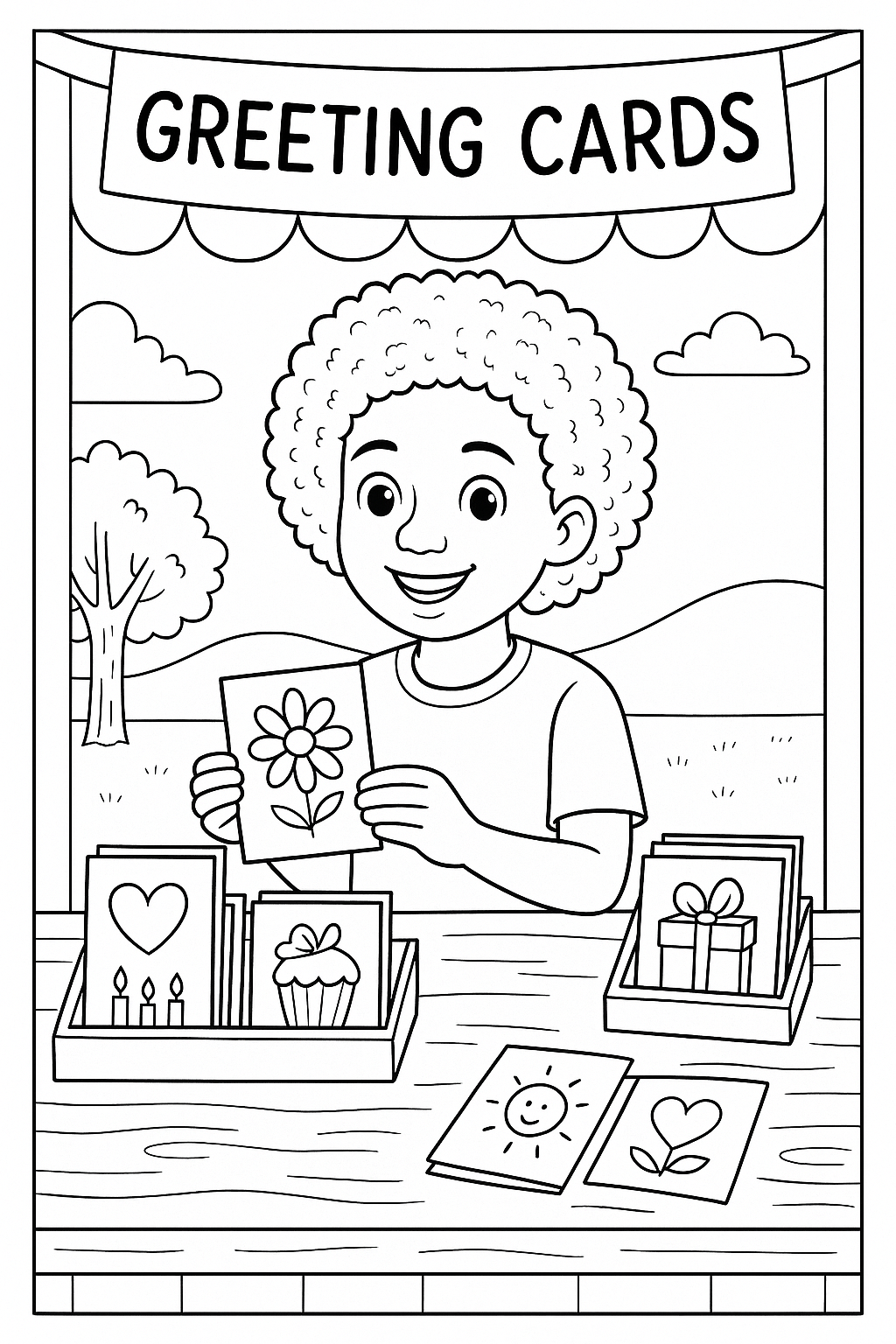
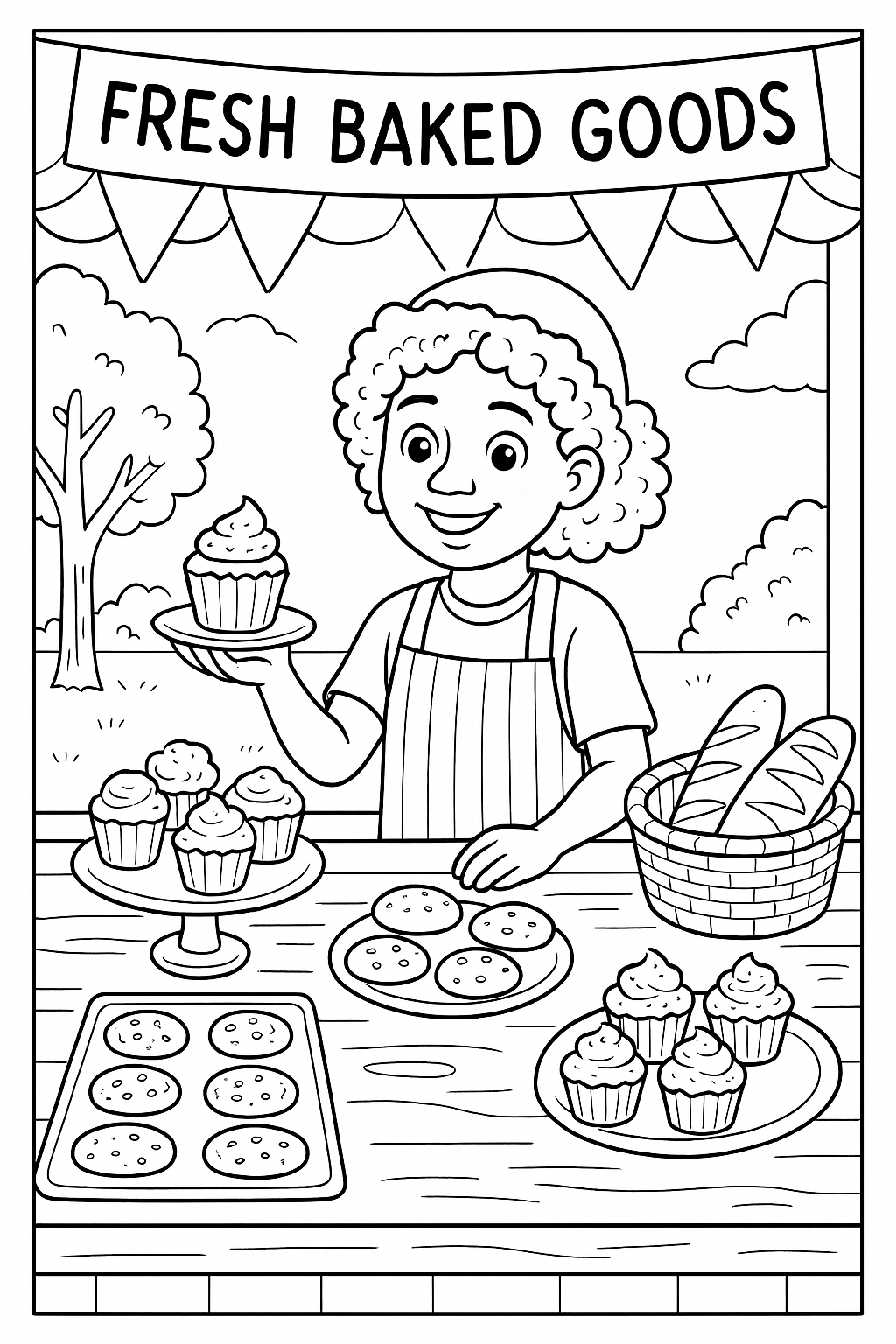
That is one of the reasons I created Colouring Out the Box, a colouring book designed to introduce young children to the idea of child entrepreneurs in a fun and age-appropriate way. Instead of presenting entrepreneurship as something only adults do, it helps children see that children can have ideas, solve problems, make things and create value too.
Sometimes financial education starts with something as simple as helping a child imagine what might be possible.

Give Children Some Choices about Their Money
Young children need boundaries, but they also need opportunities to make decisions.
If your child receives a small amount of money, resist the temptation to control every cent of it.
You might establish three simple categories:
Spend. Save. Give.

The amounts do not need to be complicated. A five-year-old can put some money into a spending jar, some into a savings jar and some aside to give to someone else.
Now he has a decision to make.
If he spends everything today, he will not have it tomorrow.
If he saves everything, he cannot enjoy spending any of it.
If he gives some away, he has chosen to use his money for someone else's benefit.
These tiny decisions are rehearsals for much bigger financial decisions later in life.
Don't Be Afraid to Let Children Make Small Money Mistakes
We often want to protect children from making mistakes.
When money is involved, that instinct can be particularly strong. Yet small mistakes with small amounts of money can be incredibly valuable.
Suppose your child spends all his money on a toy and then sees something else he would rather have a few days later.
You do not need to rescue him by buying the second thing.
You can simply say:
"I know. You really like that. You used your money for the other toy, so now you'll have to save for this one."
That can be a much more memorable lesson than a lecture about budgeting.
A five-year-old who discovers that money spent is no longer available has learned something important.
Money Conversations Should be Normal
Perhaps the most important thing you can teach a young child about money is that money is not a mysterious subject that adults discuss behind closed doors.
Talk about it naturally.
When you are comparing prices, let your children hear the conversation.
When you are saving for something, explain what you are doing.
When you decide not to buy something, explain that you have other priorities for your money.
When you give to someone, let your children see that giving is one of the ways your family chooses to use money.
You do not need to reveal private financial information or discuss adult financial worries with young children. You simply need to make appropriate money conversations part of family life.
What a Five-Year-Old Does Not Need
There is also a temptation to start financial education by teaching children complicated concepts far too early.
A five-year-old does not need to understand:
the stock market
mortgages
tax returns
credit scores
investment portfolios
cryptocurrency
detailed household budgeting
There will be plenty of time for those things.
What he needs first is a foundation of choices, consequences, work, value, saving, spending and giving.
If those ideas become familiar during childhood, more advanced financial concepts have somewhere to land later.
Start with What Your Child Sees
Your five-year-old does not need a complicated financial education programme. He needs a parent who is willing to talk about money, let him make small choices, give him opportunities to save and earn, and show him through everyday life that money is something we can learn to manage.
Most importantly, he needs to see what healthy financial behaviour looks like.
Financial education starts with us, long before it starts with them.
So don't wait until your child is old enough to have a bank account, earn a pay cheque or make serious financial decisions. The foundations are being built now.
Start small but start now. Talk about money. Let him handle it. Let him make mistakes. Help him discover the connection between work, value and reward.
Five is not too young to start. It may be one of the best times to begin.
Changing Financial Outcomes
Starts at Home
This is why I created The Roots of Wealth, a six-part self-paced course for parents.
More than just a guide to earning, this course helps families uncover and challenge the deep-seated, inherited beliefs that shape their financial habits. By recognising and breaking these unconscious generational patterns, families can build a new foundation rooted in intentionality, clear thinking, and financial responsibility.



Stay fired up for success with Shirley's
Entrepreneur Newsletter
Raising Job Creators
Keep up the momentum of building your family's financial education.
Don't lose your drive to take small daily steps to reach for big dreams.
Your privacy is secure.
You can opt-out anytime.
Categories
Raising Job Creators Newsletter
Subscribe to the newsletter and stay fired up for success! By joining, you acknowledge that you'll receive Shirley's newsletter. You can opt-out anytime hassle-free.
Copyright © 2025-2026. Shirley Erwee. All Rights Reserved
Created with ©systeme.io