Shirley Erwee
Shirley Erwee
Financial Lessons from the McDonald's Story.
The movie The Founder tells the fascinating and at times, unsettling, story of how Ray Kroc turned a small, family-run burger stand into one of the world’s most recognisable brands: McDonald’s.
It’s a film that offers business owners, dreamers and young entrepreneurs valuable financial insights. The story is also a powerful lesson for families raising children who want to think like entrepreneurs, not just employees.
Before You Watch: Setting the Scene
Watching The Founder as a family can be a powerful learning experience.
To get the most out of it, take a few minutes to introduce the story and plant key ideas to watch for.
1. Give some background
Explain that The Founder is based on the true story of how McDonald’s grew from one family-run restaurant into a global fast-food empire.
Mention that it’s not just about food—it’s about business systems, persistence and the choices people make when ambition meets opportunity.
2. Set the learning lens
Tell your children that this isn’t simply a movie night—it’s a chance to spot financial lessons and entrepreneurial insights.
Encourage the children to look for:
How McDonald’s started as a small, simple idea
What made the McDonald brothers’ system special
How Ray Kroc saw potential others missed
The difference between owning something and working for someone else
The ways ambition can be both inspiring and dangerous
3. Talk about business ethics
Before the movie starts, explain that some of Kroc’s choices were controversial.
Ask your children to think about what it means to be fair and honourable in business.
Say something like: “We’re not watching to copy everything Ray Kroc did—but to learn from both his successes and his mistakes.”
After viewing you can use the questions for discussion which follow in the purple block below this article. Let's first look at some of the major financial lessons for entrepreneur kids in the McDonald's story as portrayed in the docudrama, The Founder. You can hire the movie from various online streaming platforms. Rent from Amazon Prime here.
Financial Lessons from The Founder
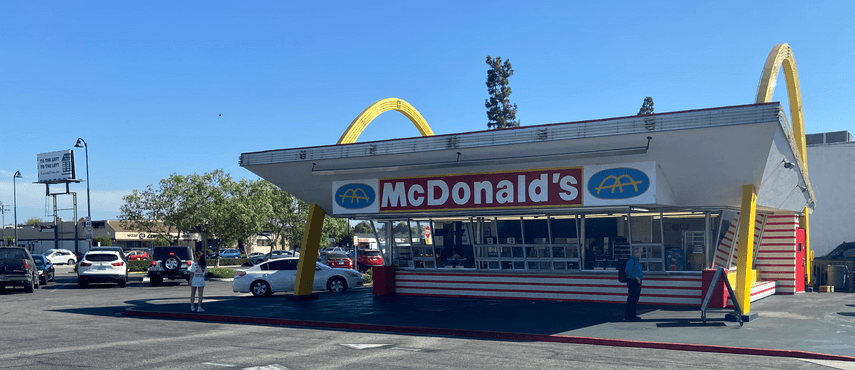
The oldest operating McDonald's restaurant, Downey, California
By Photo by Bryan Hong (Brybry26) - Own work, CC BY-SA 2.5, https://commons.wikimedia.org/w/index.php?curid=1815290
1. Big ideas often start small
When Ray Kroc first encountered the McDonald brothers’ burger stand in California, it was just one restaurant. Yet, what captured his attention was their system. They had pioneered a fast, efficient way to serve customers that was decades ahead of its time.
For families, this is a reminder that business ideas don’t have to be grand or complicated at the start. Children can begin small, with a single product, a local market stall or even a digital idea tested with friends and still build something meaningful.
The key is to encourage them to see potential, even in small beginnings and to notice where things could be done faster, smarter or better.
2. Systems create scalability
The McDonald brothers’ greatest innovation wasn’t the burger—it was the process. They mapped out their “Speedee Service System” on the ground, choreographing every movement so that each burger, shake and packet of fries could be produced consistently in seconds.
For young entrepreneurs, this shows the importance of building systems, not just products. A business that relies entirely on the founder’s personal effort has limits; a system allows it to grow.
At home, parents can reinforce this by helping children create repeatable steps for their mini ventures, such as batching orders, organising supplies or tracking income and expenses. Learning to think in systems is one of the most valuable habits an entrepreneur can develop.
3. Persistence and vision matter—
but so does integrity
Ray Kroc was relentless. He was over 50 when he discovered McDonald’s and he refused to give up on expanding the brand, even when he was faced with rejection or failure. His persistence paid off, but the movie also portrays how his ambition sometimes crossed ethical lines, particularly in his dealings with the original founders.
This dual lesson is essential for families. We want our children to dream big and stay determined, but we must also teach them that how they succeed is just as important as what they achieve. Integrity, fairness and respect for others are cornerstones of lasting success.
Talk about this as a family: How could Kroc have handled things differently? What would you have done in his place? These conversations teach children to balance drive with discernment.
4. Ownership and control are everything
One of the film’s most striking moments is when Kroc realises that he doesn’t truly own the McDonald’s business—he’s only a franchise operator under the founding brothers’ control. His breakthrough comes when he changes the business model, buying the land under each restaurant through a new company. That gave him real leverage, transforming McDonald’s from a fast-food business into a real estate empire.
This concept of ownership versus labour is crucial for families raising entrepreneurs.
Encourage children to ask: “Do I own this idea or asset or am I just working for it?” Whether it’s a lemonade stand or a digital creation, understanding ownership helps children think like wealth builders, not just wage earners.
5. Protect your ideas, but stay adaptable
The McDonald brothers were innovators, but they resisted change. They wanted to keep their restaurant small and simple. Kroc, however, saw the potential to scale. The brothers’ hesitation cost them control of their own creation.
This teaches two things:
first, to protect intellectual property and formalise agreements early; and
second, to stay open to growth. A good idea can die if its creators are too rigid to adapt.
Parents can encourage this mindset by praising flexibility, experimentation and smart risk-taking.
6. Build something bigger than yourself
Despite the controversy surrounding Kroc’s methods, his ability to build a brand that reached millions is undeniable. McDonald’s became more than a restaurant, it was a system, symbol and culture.
For children, this is a powerful reminder that entrepreneurship isn’t just about money. It’s about impact. Encourage your child to ask: “How can my idea serve more people?”
When young entrepreneurs focus on value creation and customer experience, their ventures naturally grow.
Valuable Lessons for Young Innovators
The Founder is more than a movie about burgers—it’s a case study in vision, persistence, systems and ethics.
For families raising entrepreneurs, it opens the door to rich discussions about ambition, fairness, creativity and ownership.
Next time you watch a film together, make it a learning experience. Pause and ask your children:
What made this person successful?
What mistakes did they make?
What would you have done differently?
These conversations help children connect storytelling with real-world entrepreneurship—exactly the kind of learning that shapes founders, not just spenders.
After You Watch:
Family Discussion Questions
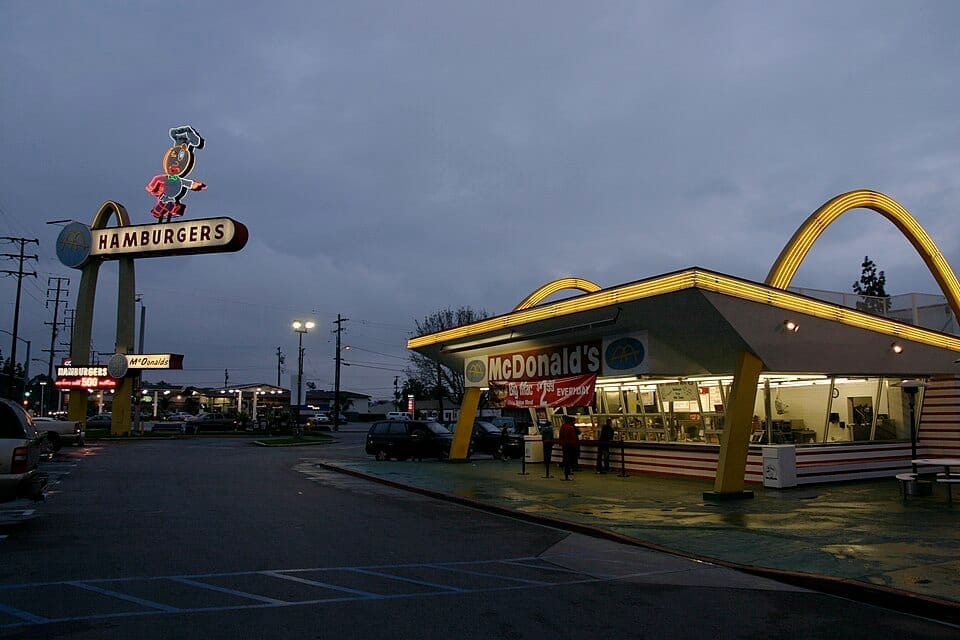
The oldest operating McDonald's restaurant is the third one built, opened in 1953 in Downey, California
By Photo by Bryan Hong (Brybry26) - Own work, CC BY-SA 2.5, https://commons.wikimedia.org/w/index.php?curid=1815290
Once the credits roll, take a few minutes to unpack what you’ve all seen.
These questions will help turn entertainment into insight.
Big-Picture Questions
What was your first impression of Ray Kroc? Did your view of him change by the end of the movie? Why?
What made McDonald’s different from other burger places at the time?
How did systems and consistency play a role in the business’s success?
Money and Ownership
What did Ray Kroc discover about who owned McDonald’s?
Why was owning the land under each restaurant such a smart financial move?
What does this teach us about building wealth and long-term financial security?
Entrepreneurial Thinking
How did Kroc spot opportunity where others saw limits?
What risks did he take? Which of them were wise and which were unwise?
What can we learn from how the McDonald brothers created their “Speedee Service System”?
Ethics and Integrity
Do you think Ray Kroc treated the McDonald brothers fairly?
Were there moments when his ambition went too far?
How can we balance strong ambition with honesty and kindness in business?
Personal Reflection
What part of the story inspired you most?
If you were to start your own business, what lesson from The Founder would you use?
How can our family apply what we learned to real-life opportunities—like saving, investing or starting a small venture?
Family Challenge: Turn Learning into Action
After your discussion, encourage each family member to do one of the following:
Younger children: Draw or describe a simple business idea they could start.
Tweens or teens: Identify one system or habit they could build to make something they already do (chores, hobbies, sales) more efficient.
Parents: Share a real story from your own work or finances that connects with one of the movie’s themes.
This reflection bridges the gap between watching and doing, reinforcing that every family can learn to think like entrepreneurs.


Stay fired up for success with Shirley's
Entrepreneur Newsletter
Raising Job Creators
Keep up the momentum of building your family's financial education.
Don't lose your drive to take small daily steps to reach for big dreams.
Your privacy is secure.
You can opt-out anytime.
Categories
Raising Job Creators Newsletter
Subscribe to the newsletter and stay fired up for success! By joining, you acknowledge that you'll receive Shirley's newsletter. You can opt-out anytime hassle-free.
Copyright © 2025-2026. Shirley Erwee. All Rights Reserved
Created with ©systeme.io